30 Million Manuscripts: India's NAMAMI Database and the Future of Sanskrit
Sanskrit manuscripts outnumber Greek and Latin combined by 100 to 1. India's National Mission for Manuscripts (NAMAMI) is cataloguing this ocean of knowledge—and much of it is now searchable online. Here's how to access it.
The Scale
“Extant manuscripts in Sanskrit number over 30 million, one hundred times those in Greek and Latin combined, constituting the largest cultural heritage that any civilization has produced prior to the invention of the printing press.”
— Gérard Huet, Amba Kulkarni & Peter Scharf, Sanskrit Computational Linguistics (2009)
| Metric | Sanskrit | Latin (USTC) |
|---|---|---|
| Estimated manuscripts | 30+ million | ~500,000 |
| Catalogued | ~5 million | ~500,000 |
| Digitized | ~350,000 | ~200,000 |
| Freely accessible online | ~76,000 | ~150,000 |
| Translated to English | <1% | ~3% |
What is NAMAMI?
The National Mission for Manuscripts (NAMAMI) was established in 2003 by India's Ministry of Culture. Its mandate: locate, document, conserve, and disseminate India's manuscript heritage. In 2025, it was renamed the Gyan Bharatam Mission with £483 crore (~$58M) funding to digitize 10 million manuscripts by 2031.
The mission operates Kriti Sampada, the National Database of Manuscripts, containing 4.4 million records. Of these, 316,585 manuscripts have been digitized (33+ million pages), and 76,000 are freely accessible to the public.
How to Access the Database
The official search interface is at pandulipipatala.nic.in. However, the interface is JavaScript-heavy and can be difficult to navigate. Here's the trick:
The Key Trick (from INDOLOGY mailing list)
- Go to pandulipipatala.nic.in/advance-search
- Set Digitization = Yes
- Set Public View = Yes
- This filters to the ~76,000 manuscripts that are BOTH digitized AND publicly viewable
- Filter further by Subject (e.g., Darśana > Nyāya for logic)
Note: The site requires JavaScript and can be slow. Some features may require registration.
Alternative: Archive.org Collections
If the government portal is frustrating, Archive.org has actual manuscript images that are freely downloadable. The Royal Asiatic Society Whish Collection contains Sanskrit palm leaf manuscripts from Kerala, digitized by the RAS London:
Sample Manuscripts (10 Downloaded)

Nyāya Philosophy
Logic treatise, Grantha script
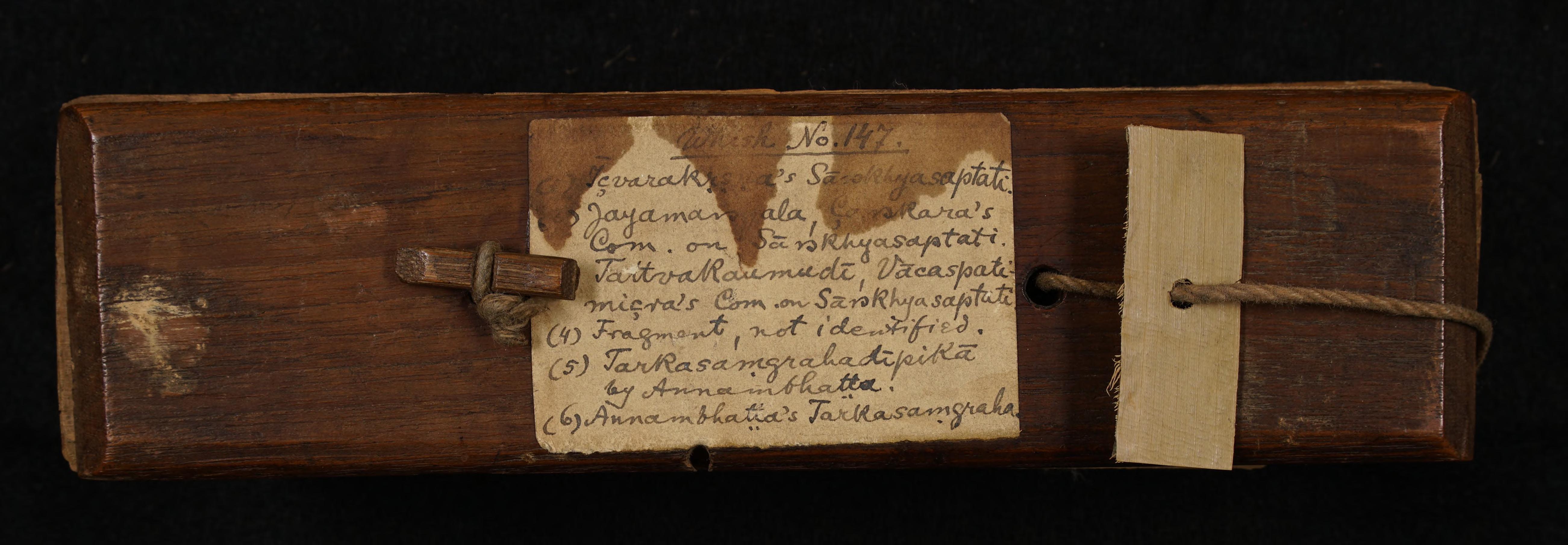
Tarkasaṅgraha
Logic primer, Malayalam, 1822

Brahmasūtracandrikā
Vedānta commentary
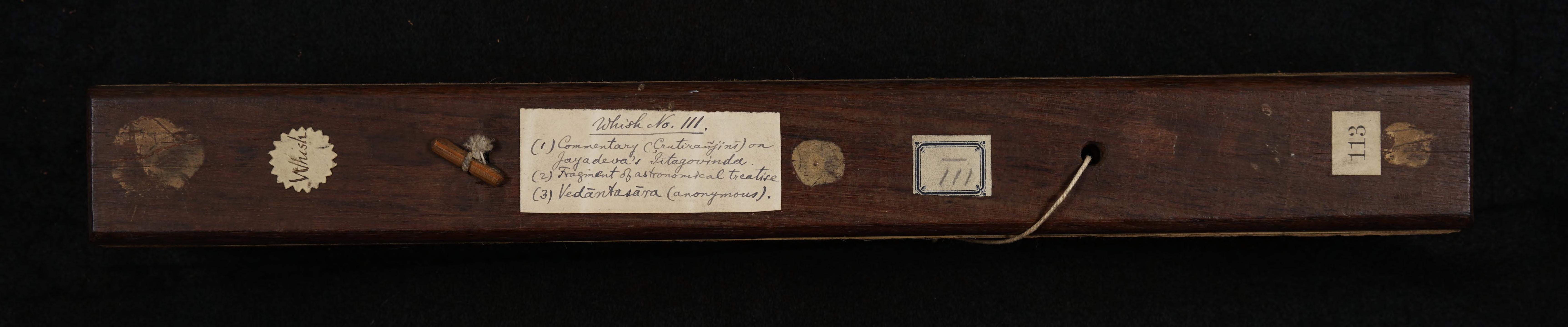
Vedāntasāra
Essence of Vedānta

Tantrasamuccaya
Ritual manual, Kerala
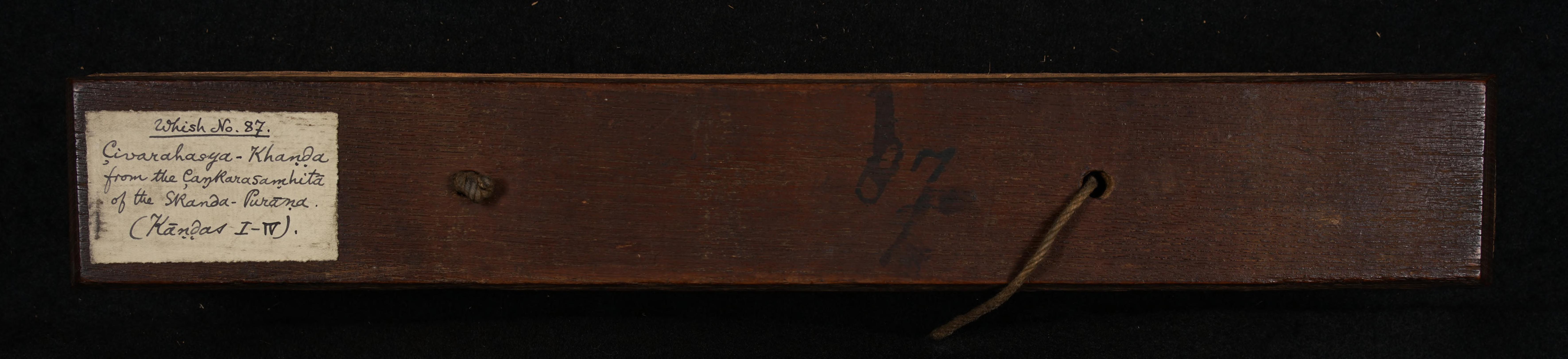
Skanda Purāṇa
Palm leaf, Grantha script
How to Download Manuscript Images
For any Archive.org item (e.g., raswhish145-147), you can download page images directly:
# Download page 1 as JPG
curl -L "https://archive.org/download/raswhish145-147/page/n0.jpg" -o page1.jpg

# Download page 10
curl -L "https://archive.org/download/raswhish145-147/page/n10.jpg" -o page10.jpg
NAMAMI Search Fields
- Filter by Subject (e.g., Darśana > Nyāya for logic)
- Filter by Language (200+ options including Sanskrit, Pali, Prakrit)
- Filter by Script (50+ options including Devanagari, Grantha, Sharada)
Search Fields Available
- Title / Author – Search by work name or author
- Subject – 400+ categories in hierarchical taxonomy
- Language – 200+ languages from Sanskrit to Zou
- Script – 50+ scripts (Devanagari, Arabic, Tibetan, etc.)
- Material – Palm leaf, birch bark, paper, copper plate
- Condition – Acidic, brittle, fungal, worm-eaten
- Repository – 200+ Manuscript Resource Centers across India
- Date – Multiple calendar systems (Vikram Samvat, Shaka, Gregorian)
Subject Classification System
NAMAMI uses a detailed hierarchical taxonomy. Here are the major categories relevant to philosophy, logic, and the history of ideas:
| Category | Subcategories |
|---|---|
| Darśana (Philosophy) | Sāṃkhya, Yoga, Nyāya, Vaiśeṣika, Mīmāṃsā, Vedānta, Buddhist, Jaina, Cārvāka |
| Vedāṅga (Auxiliary) | Śikṣā (phonetics), Vyākaraṇa (grammar), Nirukta (etymology), Jyotiṣa (astronomy), Kalpa (ritual), Chandas (prosody) |
| Upaveda (Applied) | Āyurveda (medicine), Dhanurveda (archery), Gāndharvaveda (music), Arthaśāstra (economics) |
| Vijñāna (Sciences) | Gaṇita (mathematics), Vāstuśāstra (architecture), chemistry, botany, geography |
| Tantra / Āgama | Ritual texts, mystical practices, Śaiva, Vaiṣṇava, Śākta traditions |
| Kāvya (Literature) | Poetry, drama, aesthetics (Alaṅkāraśāstra), narrative |
AI-Relevant Texts: Nyāya (Logic)
The Nyāya tradition is India's formal logic system, developed over two millennia. It includes syllogistic reasoning, epistemology, debate rules, and semantic theory. The later Navya-Nyāya (“New Logic”) developed a technical language of extraordinary precision—some scholars compare it to predicate logic.
A 1993 Bibliography of Nyāya Philosophy by Krishna Chakravorty Ganguly documents:
| Nyāya Tradition | Documents | Manuscripts |
|---|---|---|
| Navya-Nyāya (New Logic) | 1,020 | 517 |
| Prācīna Nyāya (Old Logic) | 566 | 181 |
| Nyāya-Vaiśeṣika | 472 | 216 |
| Bauddha Nyāya (Buddhist Logic) | 177 | 70 |
| Jaina Nyāya | 83 | 46 |
| Comparative / Logic | 40 | — |
| Total | 2,358 | 1,030 |
Source: Ganguly, A Bibliography of Nyāya Philosophy (National Library, Calcutta, 1993)
Key Nyāya Texts
- Nyāya Sūtra (Gautama, c. 200 BCE) – Foundational text. 528 aphorisms on logic, epistemology, debate.
- Nyāya Bhāṣya (Vātsyāyana, c. 450 CE) – First major commentary.
- Nyāya Vārttika (Uddyotakara, c. 550 CE) – Defense against Buddhist critiques.
- Tattvacintāmaṇi (Gaṅgeśa, 13th c.) – Jewel of Thought on Reality. Founded Navya-Nyāya.
- Tattvacintāmaṇi-Dīdhiti (Raghunātha, 16th c.) – Major commentary, developed the technical language.
Critical Editions Published by NAMAMI
NAMAMI publishes critical editions of rare manuscripts in the Prakashika series. As of 2024, 60+ volumes have been published. Here are the logic/philosophy texts:
| # | Title | Editor | Subject |
|---|---|---|---|
| 4 | Pakṣatācintāmaṇi & Sāmānyanirukti | Subudhi Charan Goswami | Nyāya philosophy |
| 40 | Tattvacintāmaṇi-Dīdhiti-Prakāśa-Sarvopakāriṇī | Hareram Tripathi | Navya-Nyāya |
| 41 | Nanvādatīppaṇī of Rāmacandra | Sujata Banerjee | Nyāya commentary |
| 44 | Brahmasiddhānta | Somenath Chatterjee | Vedānta |
| 50 | Lakulīśapravartitam Pāśupatatantram | Brijesh Kumar Shukla | Śaiva philosophy |
The Tattvacintāmaṇi-Dīdhiti-Prakāśa (#40) is particularly significant—it's a commentary on Raghunātha's commentary on Gaṅgeśa's foundational Navya-Nyāya text. This is the heart of Indian formal logic.
Major Repositories
| Repository | Location | Manuscripts |
|---|---|---|
| Kailashsuri Jnanamandir | Koba, Gujarat | 250,000 |
| Saraswati Bhavan Library | Varanasi | 90,000 |
| L.D. Institute of Indology | Ahmedabad | 80,000 |
| Saraswati Mahal Library | Thanjavur | 49,000 |
| Rajasthan ORI | Jodhpur | 48,000 |
| Bhandarkar ORI | Pune | 29,000 |
| University of Calcutta | Kolkata | 28,000 |
Other Resources
Best Places to Find Actual Manuscript Images
| Source | What's There | Access |
|---|---|---|
| Archive.org Palm Leaf Collection | RAS Whish manuscripts (Kerala, 19th c.) | Free, downloadable |
| Archive.org IGNCA Collection | ASI Sanskrit texts, catalogues | Free, downloadable |
| sanskritdocuments.org | 175+ scanned books, DLI mirror | Free, downloadable |
| BDRC (library.bdrc.io) | Tibetan + Sanskrit Buddhist texts | Free, online viewer |
| Cambridge Digital Library | 1,600+ South Asian manuscripts | Free, online viewer |
| NAMAMI (pandulipipatala.nic.in) | 76,000 publicly viewable | Free, JavaScript required |
- Archive.org Sanskrit Palm Leaf Collection – Actual manuscript images, freely downloadable
- Sanskrit Documents Scanned Books – 175+ Sanskrit books, mirrors 422,000 PDFs from Digital Library of India
- India Office Sanskrit Catalogue – British Library's 80,000+ South Asian manuscripts
- Cambridge Digital Library – 1,600+ Sanskrit works being digitized
- Buddhist Digital Resource Center (BDRC) – Tibetan + Sanskrit Buddhist manuscripts
- NGMCP Hamburg – 180,000 Nepalese manuscripts microfilmed
- INDOLOGY Scanned Catalogues – Collection of historical manuscript catalogues
- Bibliography of Nyāya Philosophy – 2,358 documents catalogued (1993)
The Gap
Of 30+ million Sanskrit manuscripts:
- ~5 million catalogued (17%)
- ~350,000 digitized (1.2%)
- ~76,000 freely accessible (0.25%)
- Translated to English: a tiny fraction of 1%
Compare this to Renaissance Latin, where we estimate ~3% translation rates as scandalously low. Sanskrit's situation is an order of magnitude more severe.
Digitized Texts Ready for Translation
We've identified 27 high-priority Sanskrit texts on Archive.org that are digitized and ready for translation work. See the full list in our Translation Roadmap under “Sanskrit Logic & Philosophy of Mind.”
Top 3 Priorities
| Text | Why It Matters | Status |
|---|---|---|
| Syādvāda-mañjarī | 7-valued logic (Saptabhaṅgī) — 2000 years before Łukasiewicz | UNTRANSLATED |
| Tattvacintāmaṇi-Dīdhiti | Core of Navya-Nyāya formal logic — India's “Principia Mathematica” | UNTRANSLATED |
| Pramāṇavārttika | Apoha theory — meaning through exclusion, anticipates contrastive learning | PARTIAL |
AI-Relevant Categories
- Philosophy of Language – Vākyapadīya (Sphoṭa theory: meaning as holistic “burst”)
- Many-Valued Logic – Jain Syādvāda (7 truth values for uncertainty)
- Formal Inference – Navya-Nyāya (technical metalanguage for inference rules)
- Cognitive Architecture – Abhidharmakośa (75 mental factors: attention, memory, reasoning)
- Exclusion Semantics – Buddhist Apoha (“cow” = “not non-cow”)
- Algorithmic Thinking – Śulba Sūtras (geometric algorithms with rope/stakes)
Next Steps
We're now working with these digitized texts:
- Download PDFs – All 27 texts are freely available on Archive.org
- OCR & digitize – Many scans need text extraction for machine processing
- Translate priorities – Starting with Tarkasaṅgraha (15-page primer) and Syādvāda-mañjarī
- Build parallel corpus – Sanskrit-English aligned texts for training
The 1,000+ Nyāya manuscripts documented by Ganguly represent a treasure trove for understanding formal reasoning traditions outside the Greek-Latin lineage. Most remain untranslated. This is the work.
Sources
- National Mission for Manuscripts (NAMAMI)
- Pandulipi Patala – National Database of Manuscripts
- Ganguly, A Bibliography of Nyāya Philosophy (1993)
- New Catalogus Catalogorum – 42-volume Sanskrit works register
- Huet, Kulkarni & Scharf, Sanskrit Computational Linguistics (Springer, 2009)
SHARE THIS ARTICLE
Discussion
Loading comments...